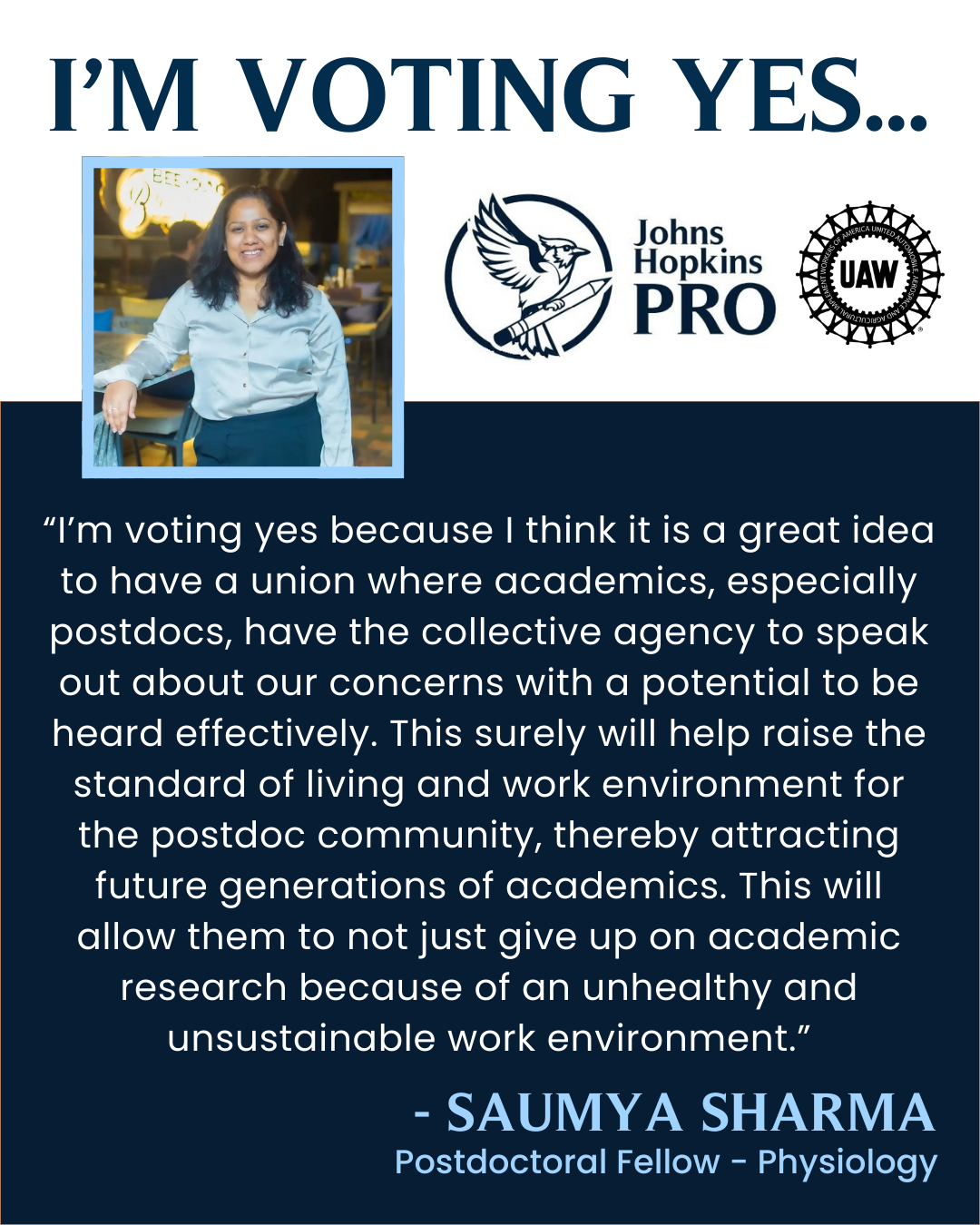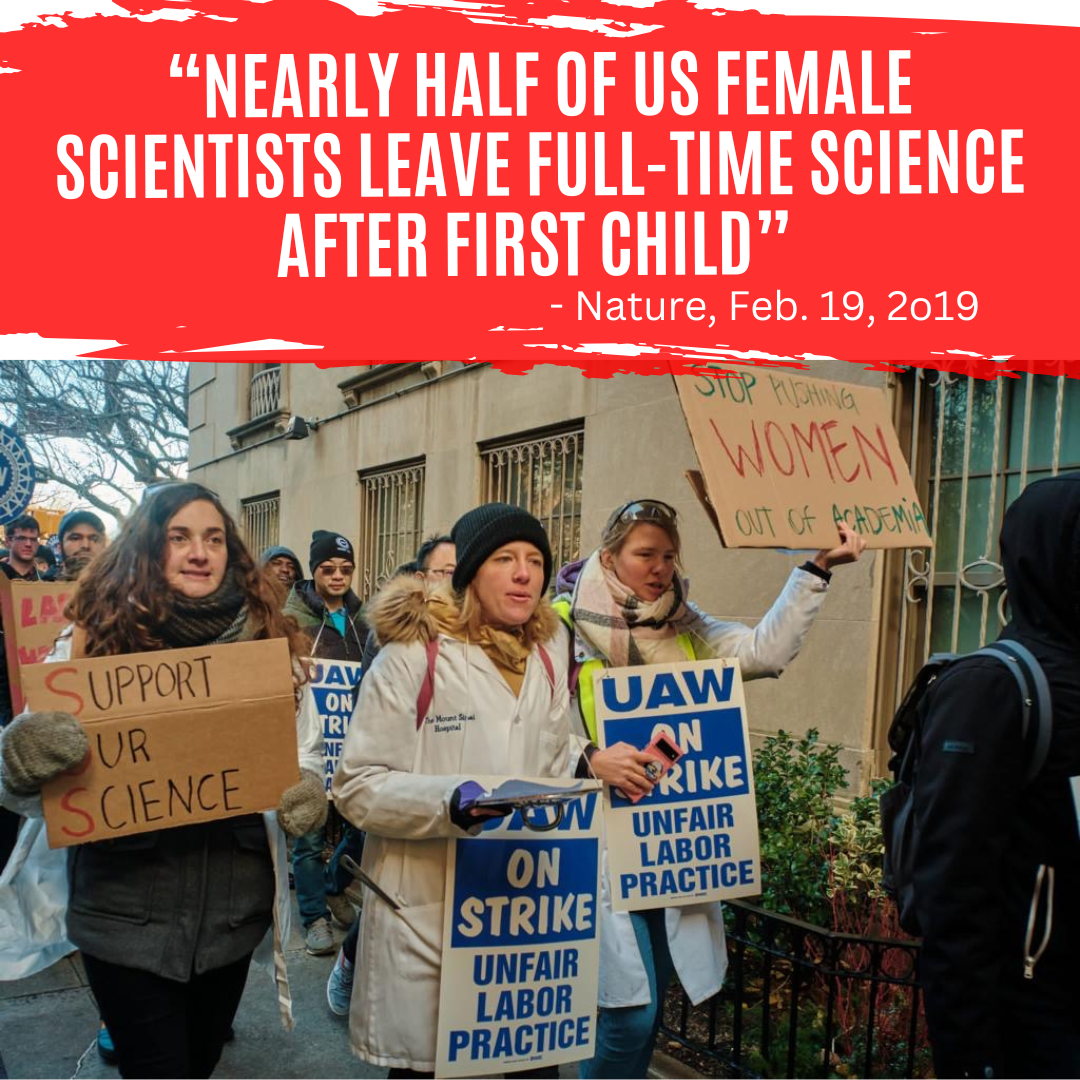
We’re Voting Yes
Johns Hopkins Postdoctoral Researchers: Vote Union YES on June 4th, 5th, and 6th!
We have a clear choice in this election.
Voting “YES” means Johns Hopkins administrators would have a legal obligation to bargain with our elected postdoctoral representatives over pay, benefits and workplace rights, and to secure any agreements on improvements or maintaining current benefits in a legally binding and enforceable contract. We will be joining over 100,000 UAW academic employees in working together to make research workplaces more just, fair, and equitable.
Over the course of over a thousand conversations with postdoctoral researchers at JHU over the past few years, we’ve seen that we share many of the same challenges regardless of our department, school, or campus. These include increasing bureaucratic hurdles for international workers, unpredictable salary increases that don’t match the increased cost of living in Baltimore, scattered help and no reimbursement in the visa application or renewal process, lack of health coverage for dependents for those of us who are parents or taking care of loved ones, and insufficient recourse for discrimination and bullying. These challenges add unnecessary stress to the postdoc experience and make it more difficult to focus on doing quality research.
Joining Together to Improve Our Working Conditions & Protect Research Funding
Right now, Johns Hopkins administrators decide unilaterally if, how, and when to address problems affecting postdoctoral researchers. Additionally, the NIH funding cuts announced on February 7, 2025, are an unprecedented attack on biomedical research in the United States, and could have serious and long-lasting negative impacts on US research. These attacks on science provide even more reason for us to unionize.
With collective bargaining, we would have more power to negotiate for protections against the impact of these kinds of attacks on science funding. With collective bargaining, we will be able to meet at the bargaining table as equals. With strong participation and support in our vote we can negotiate a contract that not only improves our pay, benefits, and workplace rights, but also ensures the security and stability that enables us to do quality research. With the continuity of a certified union, we can project our voices beyond the campus and build a more connected community within it. No matter what the institution’s financial situation, it’s better to have a seat at the table in decisions that affect our working conditions.
By unionizing with the UAW we are also joining with tens of thousands of other higher education workers across the country who are fighting back against cuts to federal research funding, through organizing and direct action, advocacy efforts at the national and local level, and legal efforts to prevent or delay unlawful cuts. During the first Trump administration, UAW members also mounted a joint campaign to call for increased research funding in light of COVID-19, to support the ability of universities to emerge from the crisis and continue performing leading-edge research. UAW was also a national sponsor of the March for Science in 2017, and successfully fought to turn back the grad tax.
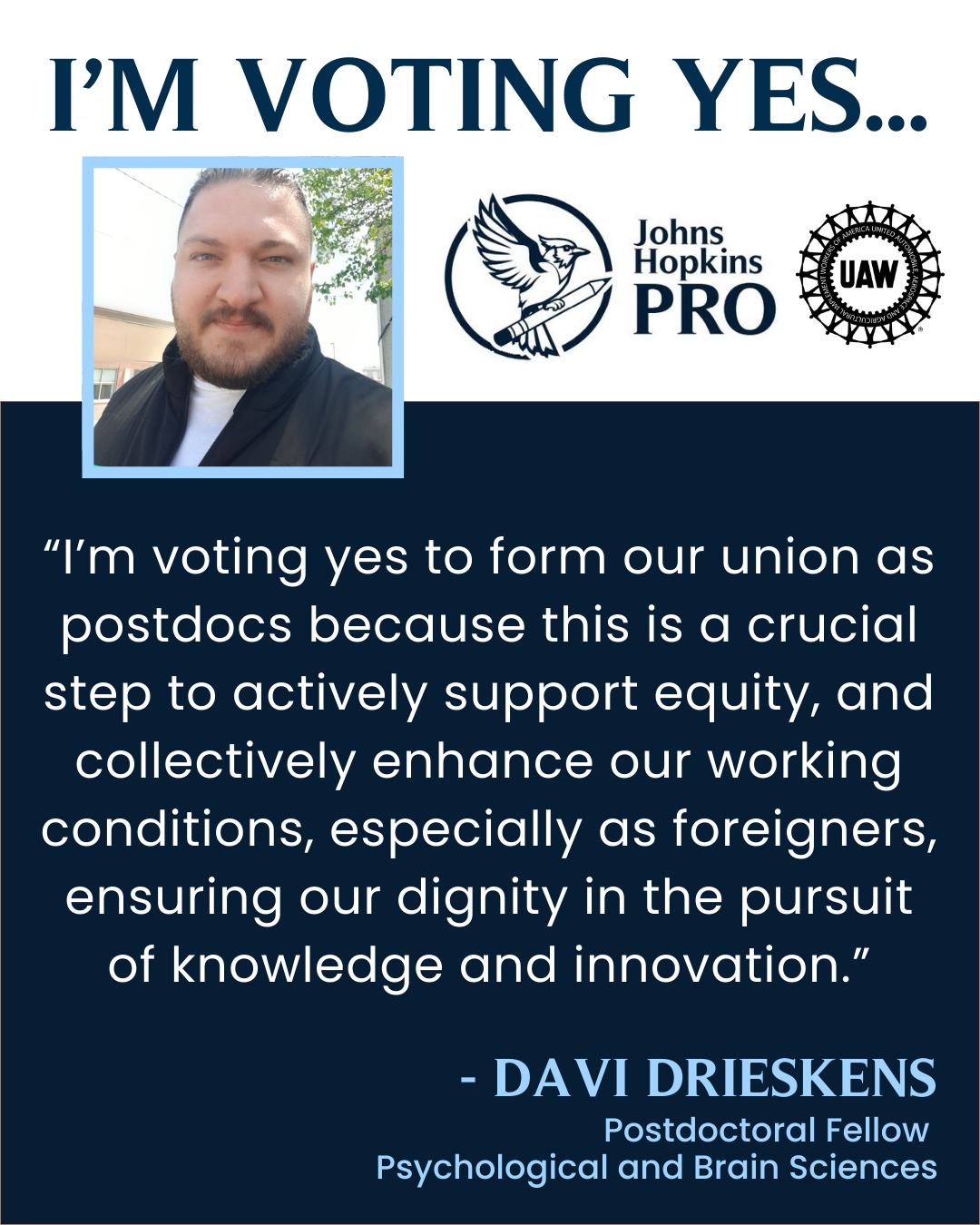
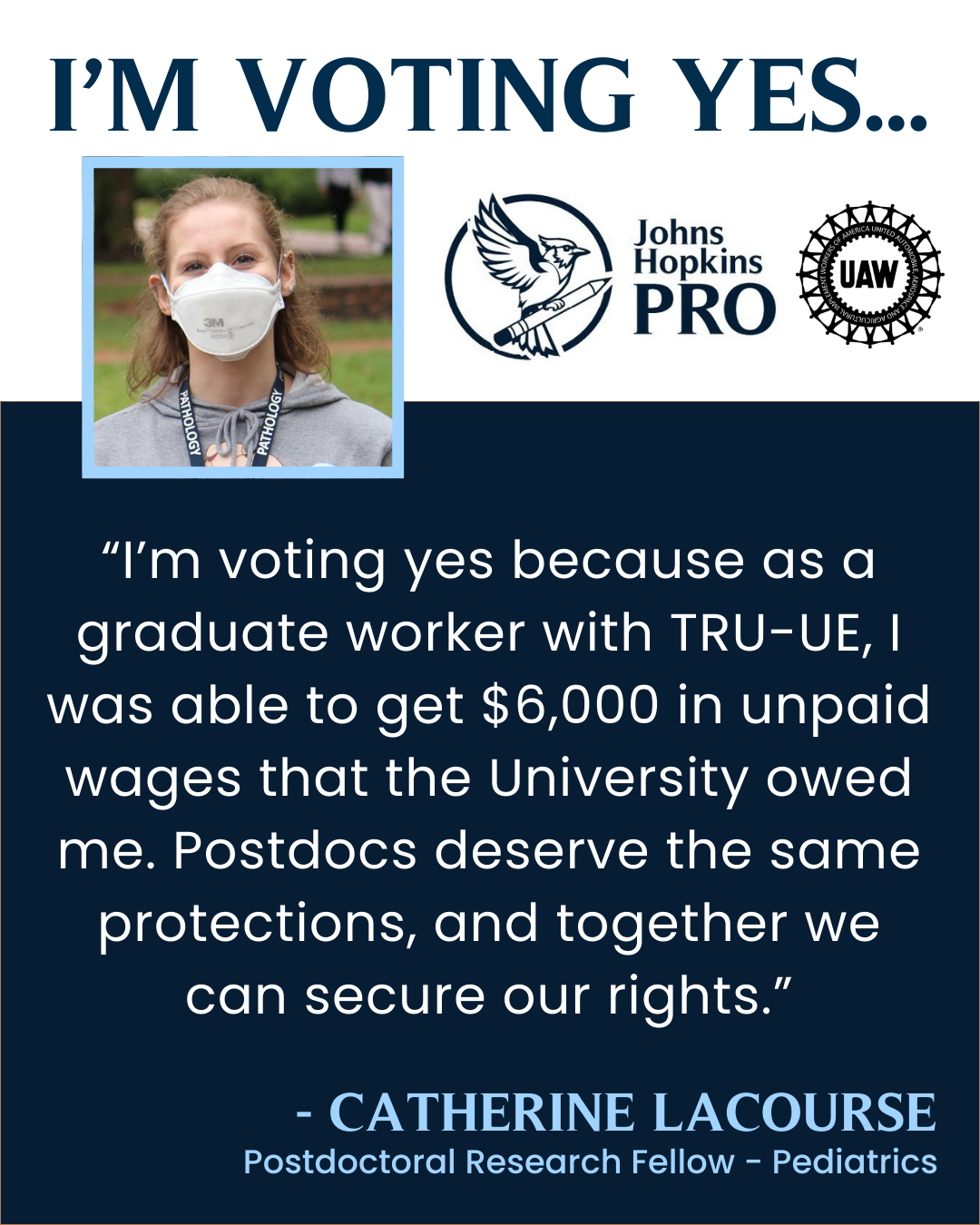
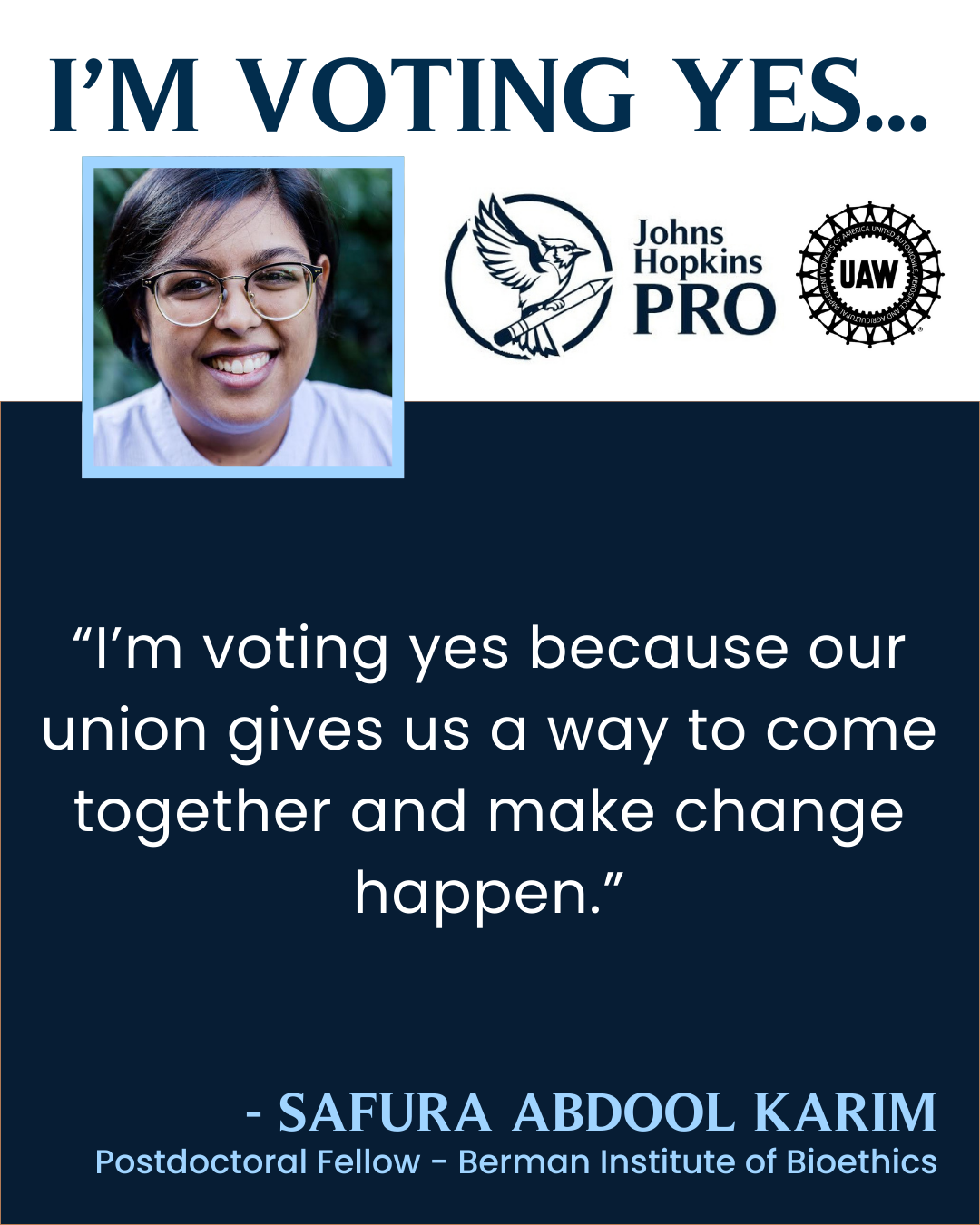
In hundreds of conversations, town halls, happy hours, and other meetings, postdoctoral researchers have already identified some of the common priorities that we could address through a collectively bargained contract. Consider the thoughts of our colleagues and these basic reasons to vote “union yes” in person on June 4th, 5th, and 6th.
Eligibility:
- Who: Eligible voters are all full-time and regular part-time postdoctoral researchers who provide services to the Employer, including Postdoctoral Fellows and Postdoctoral Research Fellows, who were employed by the Employer during the payroll period ending April 30, 2025.
- How: Bring your Hopkins ID, or another form of government-issued identification.
Voting Information
East Baltimore Campus:
- Dates: Weds. June 4th and Thurs. June 5th
- Polling Times: 9am-1pm; 3pm-7pm
- Polling Location: Turner Auditorium East Room (720 Rutland Ave) – link to map
Homewood Campus:
- Dates: Weds. June 4th and Thurs. June 5th
- Polling Times: 9am-1pm; 3pm-7pm
- Polling Location: Ames Hall, Room #402 – link to map
Bayview Campus:
- Dates: Fri. June 6th
- Polling Times: 9am-11am; 2pm-4pm
- Polling Location: HR Building, 5300 Alpha Commons Drive, Classroom #152 – link to map
Washington D.C., Florida, and Telecommuting Workers*:
- Mail Ballots Sent: Tuesday, May 20th
- Mail Ballots Returned By: Tuesday, June 10th
*Didn’t receive your ballot? Call the Baltimore Regional National Labor Relations Board (NLRB) Office at (410) 962-2822.
Say that you are calling in reference to the Johns Hopkins Postdoctoral Researchers union election and request a replacement mail ballot kit.
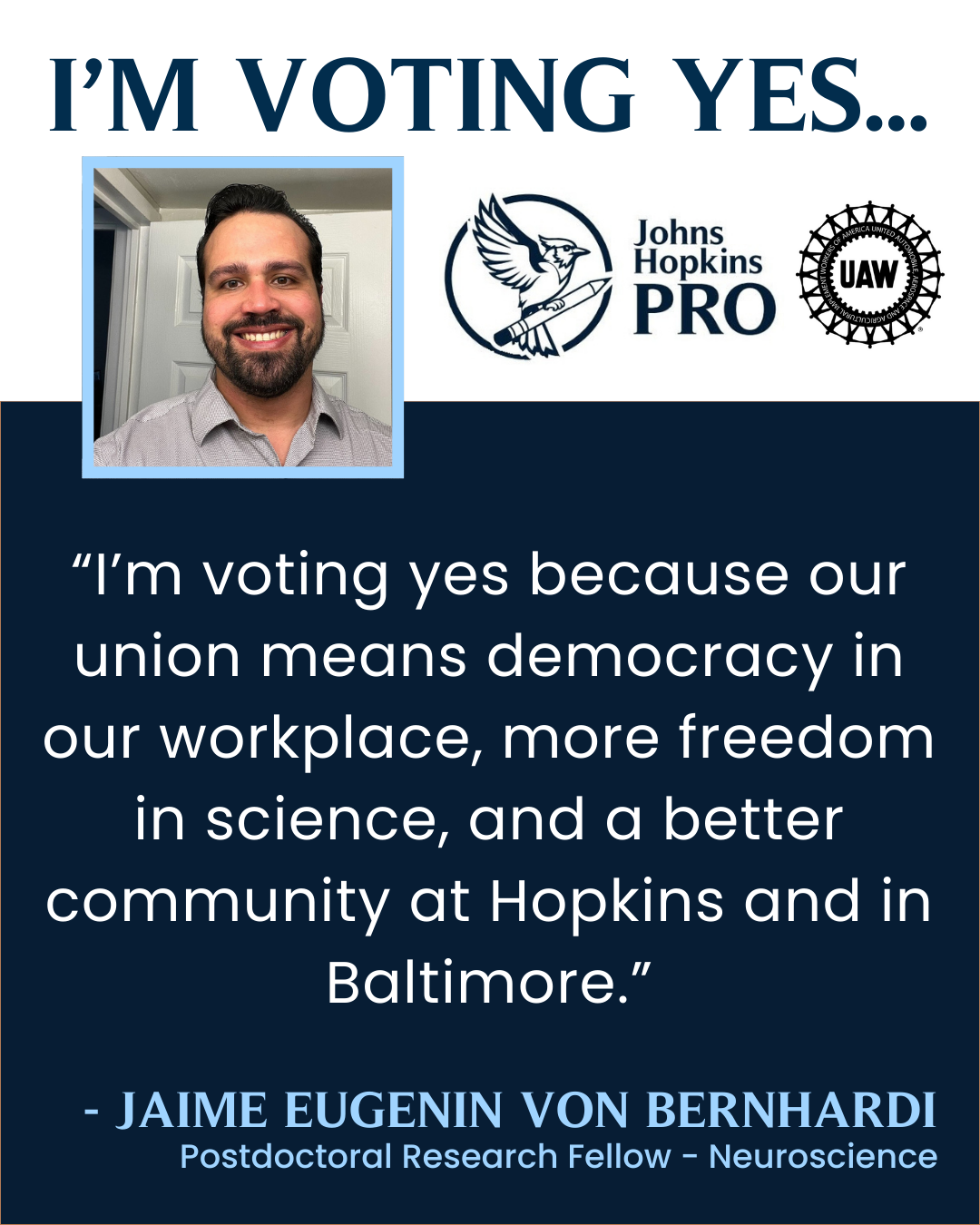
In the News
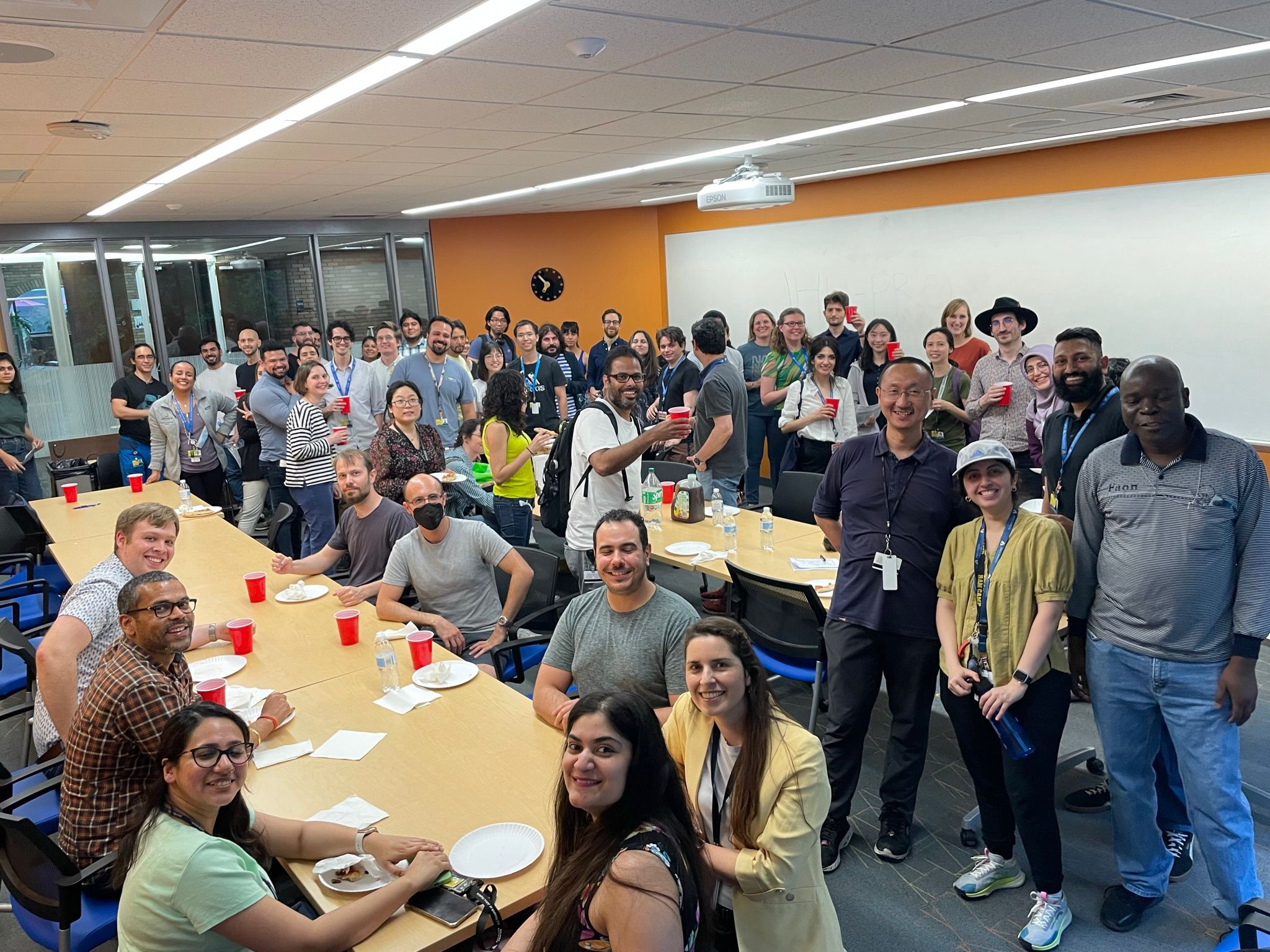
JHU News-Letter: Hopkins-PRO Union Launch Picnic celebrates postdoctoral community and advocacy efforts
Inside Higher Ed: Trump’s upheavals worry job-hunting postdoctoral researchers
Baltimore Sun: Johns Hopkins postdoctoral researchers file petition to unionize 1,600 workers
Baltimore Business Journal: College workers file to form 1,600-person union – Baltimore Business Journal.
Fair workplace standards enable researchers to prioritize our research
As postdoctoral researchers, our work powers JHU’s research mission — we make valuable contributions that have earned JHU international renown and bring in the funding that supports day-to-day operations, including the most NIH funding of any University in the United States. We do it in one of the most expensive cities in the country with salaries that have not kept pace with generationally-high inflation and do not reflect the expertise we bring to JHU every year.
In 2020, postdocs at Columbia approved their first union contract and took their minimum salaries from the lowest for postdocs in New York City to the highest, building on these gains when they renegotiated in their contract in 2023, with postdocs winning up to 24% raises over the life of the contract. Also in 2023, postdocs at Mount Sinai won the highest minimum salaries in the country for postdoctoral researchers, and were followed in 2024 by postdocs at Caltech. These gains have helped raise the standard for other major research institutions across the country, leading to successful efforts to unionize by postdocs at institutions like Harvard University, Rockefeller University, Weill Cornell Medicine, and Albert Einstein College of Medicine. It is now time for us to come together and demand salaries and other benefits that reflect the value of our contributions, and secure them in a contract, so we can focus on the quality of our research instead of how to make ends meet.
How have other researchers used a union contract to improve compensation?
Sinai Postdocs celebrate 24% pay boost in one of the world’s most expensive cities
“How Unionization Improves the Mount Sinai Postdoc Experience”
Contract Gains for Columbia Associate Research Scientists and Postdocs
Postdocs and Graduate Student Workers at Caltech Won Major Improvements
See what other unionized researchers have won in their contracts
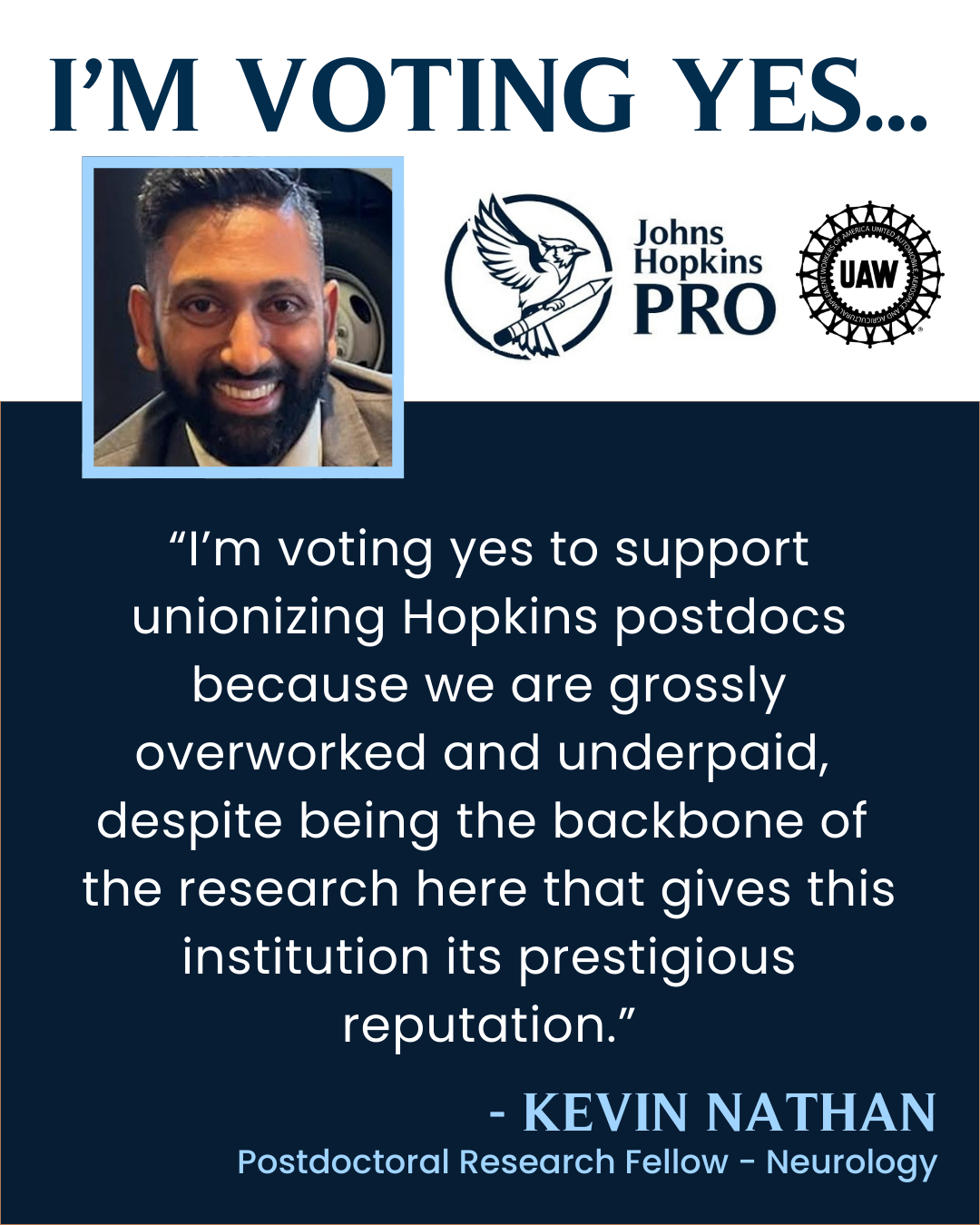
Continuing to Build a Movement at Johns Hopkins
More than 100,000 academic employees across the U.S. have already chosen to join UAW. This includes researchers at Columbia University, The Rockefeller University, Weill Cornell Medicine, Albert Einstein College of Medicine, Harvard University, Caltech, University of Connecticut, University of Massachusetts, University of California, and University of Washington, among others. By uniting together, academic employees are driving up standards in higher education and building a powerful voice for research scientists, postdocs, graduate workers, and non-tenure track faculty.
In January 2023, graduate teaching and research assistants at JHU voted by an overwhelming 97% in favor of unionizing and went on to negotiate a first union contract. Since then, our colleagues have enforced their contractual rights while continuing to organize around issues that matter to them.
Many of us were graduate student employees at Hopkins previously’ and continue to work alongside our unionized graduate colleagues. Their working conditions are our working conditions, and we share many of the same priorities as researchers. Together, we drive the vast majority of the research at Hopkins, and by forming our own union, we can more effectively coordinate in order to build a stronger voice for all of us working in labs at the University.

Joining a national movement to fight for our rights and priorities
At a moment when the scientific enterprise is under unprecedented attack, it is even more urgent that we have a say in decisions affecting our working conditions, the security of a union contract, and a bigger voice alongside other researchers to advocate for our collective interests at the national level. The UAW has provided a critical platform for advocacy around these issues for decades.
Unpredictability around federal research funding and visa processes affect all of us at Hopkins, but cause particular stress to members of our workforce without the security of a union contract. This stress negatively impacts our ability to do quality work, and threatens to make it more difficult to attract and retain highly-trained and specialized researchers. By bargaining collectively with Hopkins, we can make our work more stable, while having a stronger platform with other UAW researchers nation-wide to advocate for policies that support researchers, particularly the majority of us who are visa-holders.
UAW academic workers at Hopkins have already been at the forefront of the national response to funding cuts, including speaking up at rallies, calling our elected representatives, sending letters, and organizing as part of a National Day of Action. At the national level, academic workers in the United Auto Workers (UAW) have engaged in lobbying members of Congress and the senate to protect research, and the UAW was a national co-sponsor of the Stand Up for Science actions that took place in thirty two cities in early March, 2025.
How UAW Academic Workers Are Fighting Back Against Cuts to Federal Funding
“It’s Sad We Have to Do This”: Academic Unions Are Rallying to Defend Science
Read about UC postdoc and UAW efforts to support federal science funding
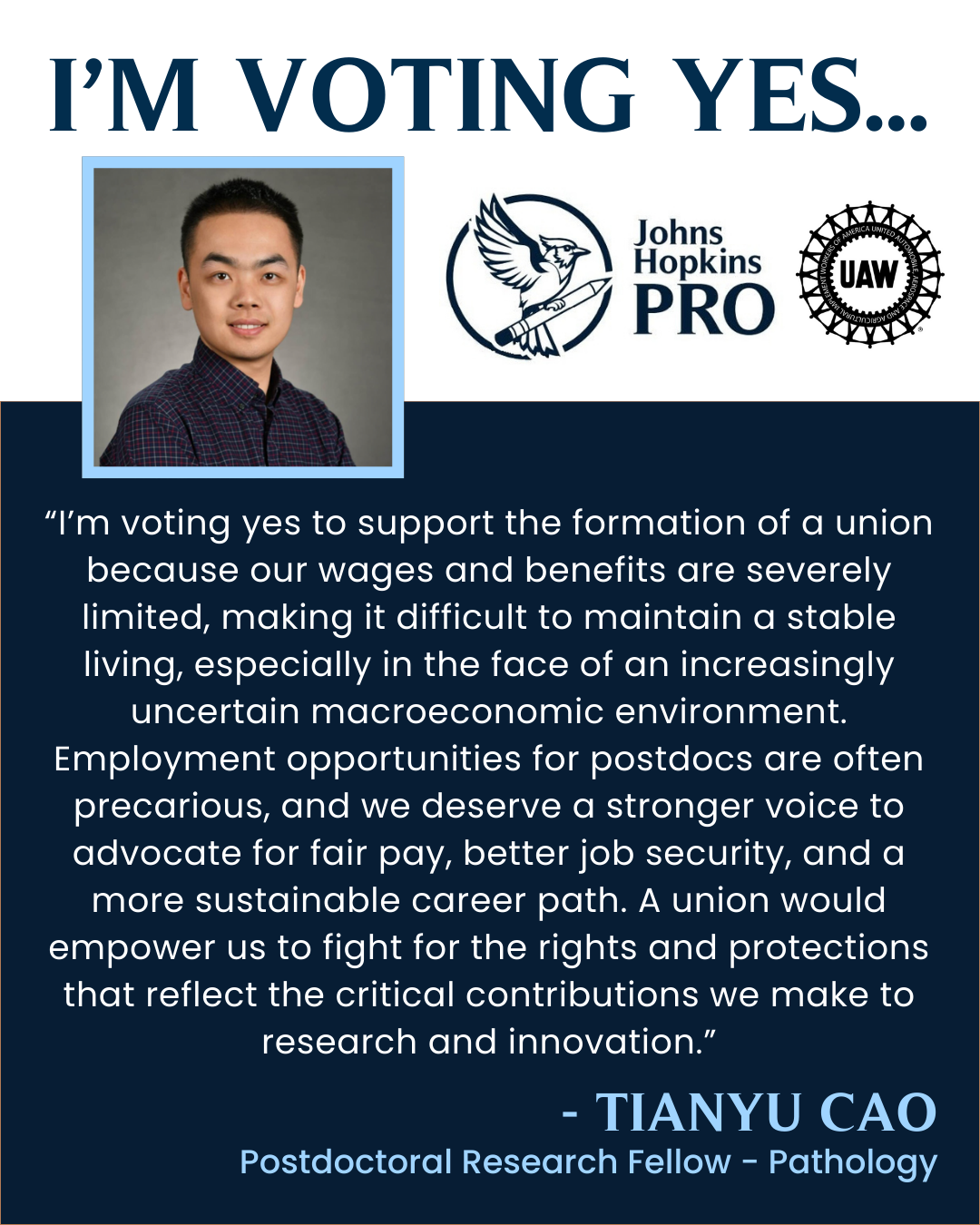
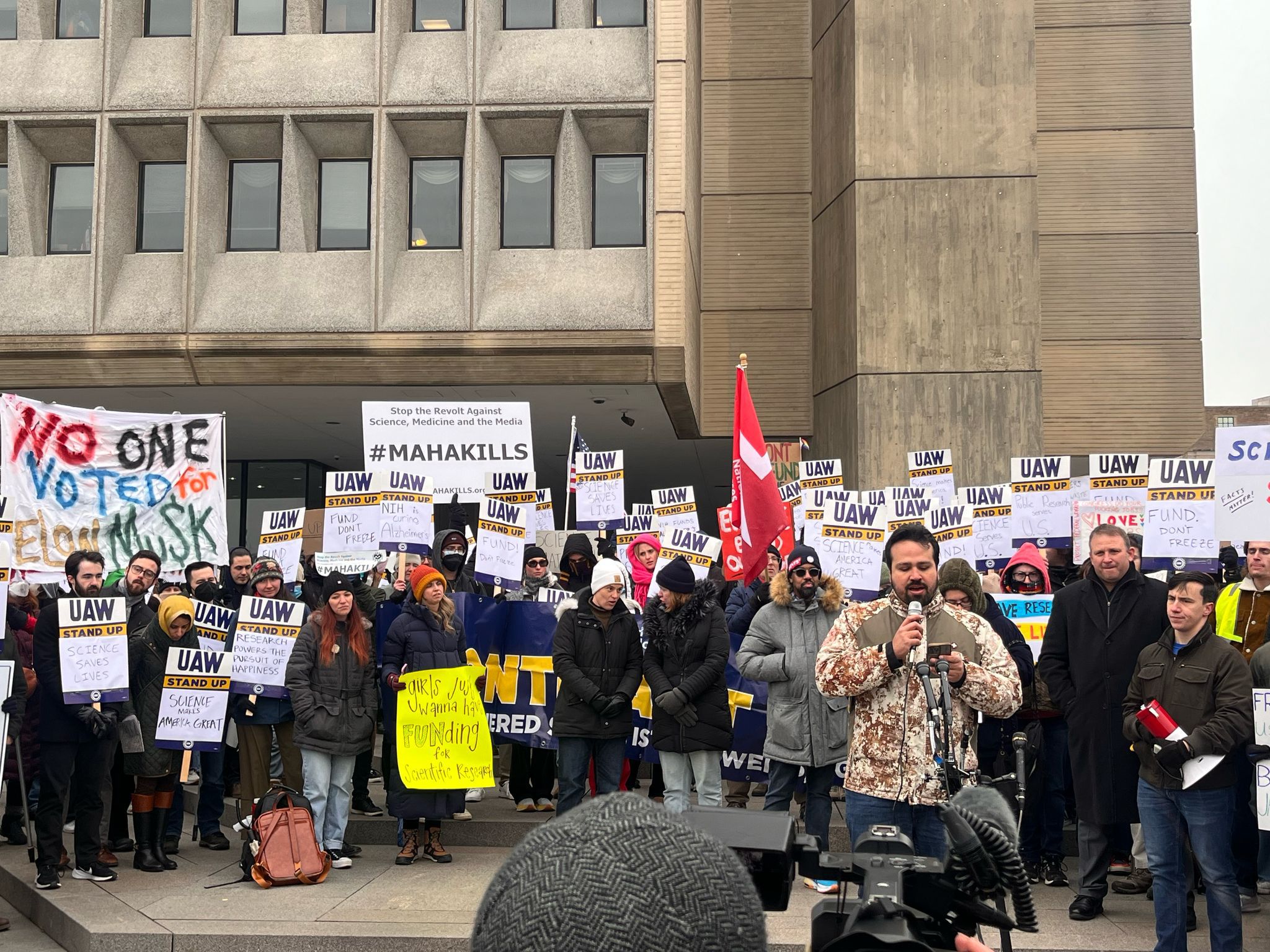
A stronger voice to advocate for International Worker rights.
With more than 100,000 academic workers across the US, including postdocs, RAs and TAs, and non-tenure-track faculty, the UAW nationally and locally has become a leading voice advocating for expanded opportunities for international students to transition to early-career research positions in the US after graduation and for robust federal investment in science research.
Under Trump’s second presidency, UAW academic workers have led the way in efforts to fight cuts to federal research funding, knowing how critical stable funding is to secure our lives in the U.S. as visa-holders. Through the UAW, workers have also created resources to support international scholars, including setting up an 24-7 immigration hotline staffed by immigration attorneys, organizing an online info session watched by thousands of members, developing sample demands for use in negotiations, and producing FAQs for international scholars.
The UAW has also fought back legally by supporting lawsuits with other higher ed unions against threats to arrest and deport students for protected speech (AAUP/Middle East Studies Association vs. Rubio). At the national level, UAW has also provided a platform to support bills in Congress that expand visa and green card access, and oppose efforts in Congress to target Chinese students and scholars.
The UAW’s commitment to international researchers and scholars stems from the leadership of international researchers and scholars themselves. Researcher and graduate employee unions affiliated with UAW are often led by international students and scholars, who serve in top leadership positions in local unions nationwide.
Joining together with other academic workers in the UAW has become more urgent than ever as recent government actors have waged unprecedented attacks on science, sexual harassment protections, and the rights of international scholars.
Protecting the Rights of International Workers in the UAW
Letter to the editor: UAW is a strong ally for international students and postdocs
2023 Op-Ed: “As International Postdocs at Mount Sinai we are voting Yes for our Union”
UAW 4121 stands up against Trump ruling that limits the visas of international students and scholars
UAW 5810 Resolution To Mt. Sinai Postdocs on International Researcher Rights
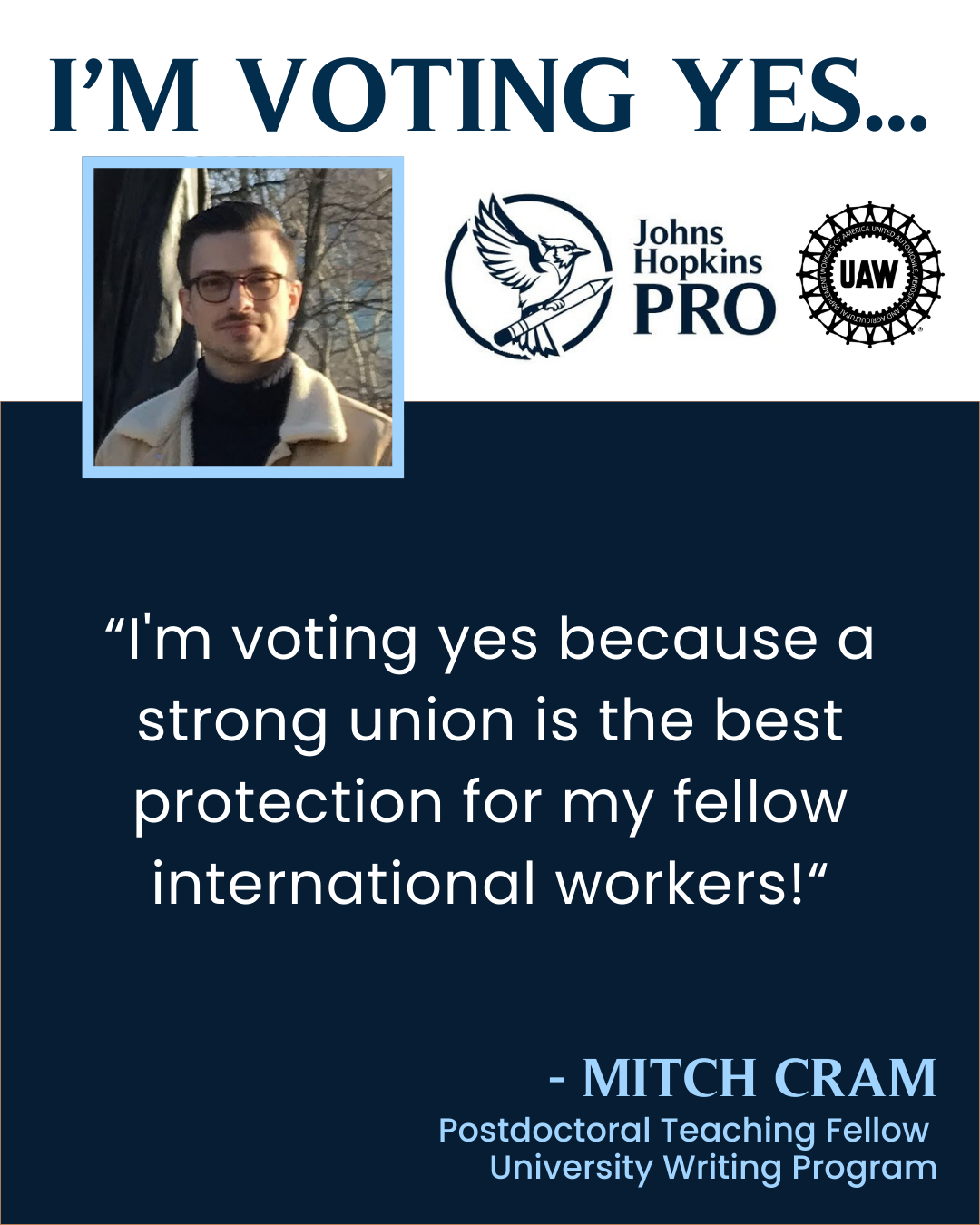
Our research is stronger when everyone can contribute.
Pregnancy, childbirth and adoption should be occasions for celebration – without unnecessary stress caused by having to return to work too soon after giving birth, or concerns about unstable benefits, housing, or visa status. Unfortunately, this kind of stress is all too prevalent for Hopkins researchers raising children in Baltimore and the surrounding area. More women are obtaining Ph.D.s in science than ever before, but those women — often due to discrimination and unequal pressures on early-career researchers choosing to have a family — are far more likely than men to leave academia before obtaining tenure at a college or university. By forming our union, we can bargain for more support for those of us with families, or who would like to start one, including by fighting for benefits like dedicated childcare benefits and funds, dependent health coverage, and expanded access to paid parental leave.
Under-representation of women has been a longstanding problem within academia, and that’s why winning significant improvements in this area is so important.
Read how other researchers have unionized and made their employers more family friendly.
Why Mount Sinai postdoc parents voted “YES” for a more family-friendly research community
Columbia graduate workers win fully-paid dependent health insurance
Sinai postdocs won an emergency support fund that can be used for childcare expenses
UW postdocs won the creation of a new caregiver fund
Columbia postdocs protected and improved a childcare benefit upt o $5,000 per year
UC Postdocs won a dedicated childcare subsidy after years of opposition from the UC administration
Together we can make Hopkins more equitable and inclusive.
Inequalities — including those based on gender, race, sexual orientation and immigration status — continue to create barriers for many of the most talented to enter the academic and scientific workforce. And existing systems of recourse for problems like discrimination, harassment, and bullying too often fail and can take years. A recent survey conducted by Nature found that 1 in 5 grad students faced gender or racial-based discrimination, and another study found that early-career researchers from abroad are more likely to be threatened with termination.
Though much work remains to be done, researchers, postdocs, graduate students, and faculty in the UAW have helped make progress on many of these issues, both at the bargaining table and in policy advocacy through the UAW. At the University of Connecticut, for example, a graduate assistant worked with her union to successfully resolve a major sexual assault and harassment complaint in three months, By forming a union, we can negotiate for strong, survivor-centered protections and hold Hopkins accountable.
At other major research institutions like Columbia, Mount Sinai, NYU, and the University of Washington, unionized researchers have won strong protections like enforceable timelines, union representation, protection from retaliation, and the option to appeal to a neutral third-party arbitrator for cases of harassment, discrimination, and abusive conduct. With a union, we have more power to be heard, to determine our right to a safe and healthy workplace, and to ensure that our rights are enforced.
UConn Graduate Student Union Helps Handle Sexual Harassment
“Workplace Bullying in Higher Education is Rampant. We’re Fighting Back”
UC International Postdoc Takes on Pregnancy Discrimination and Wins